Showing posts with label pregnancy. Show all posts

Wednesday, 7 March 2018


5 Foods Proven to Boost Fertility


Tomatoes

It's no secret that tomatoes are an excellent source of lycopene, an important antioxidant that helps rid free radicals from the body. When free radicals are present, they can cause females and males to experience difficulty in nearly every step of the reproductive process. Since male infertility is often not addressed, it's important to note that recent studies have shown lycopene to be a high nutrient that assists with sperm viability.


PLANT PROTEIN


Plant Protein

Protein is an essential macronutrient, essential in the body to build and repair tissues, bones, cartilage, hair, skin, and blood, as well as forming enzymes and hormones. Research from the Nurses' Health Study has revealed that plant-based proteins show some protection against ovulatory infertility compared with animal-based proteins. I'm not saying throw in the towel on those lean beef burgers, but definitely, consider swapping them out more frequently for delicious plant-based options. 


Whole Grains

Whole grains provide complex carbohydrates that help regulate your blood sugar. When your diet is high in refined carbohydrates, like those found in white bread, sugary cereals, and sweet treats, your pancreas has to release the hormone insulin to normalize blood sugar levels. Research has shown that high concentrations of blood insulin increase ovulatory infertility in females. 


Whole Milk

Did you know that incorporating one or two servings of full-fat dairy products (milk, yogurt, and cottage cheese) may offer protection against ovulatory infertility? Yes, findings from the Nurses' Health Study have shown that opting for full-fat dairy options while trying to conceive may increase your chances of success. When fat is removed from dairy, it alters the balance of sex hormones that in turn affect your chance of ovulation and conception. It's important to note that with the full fat come more calories, so be sure to include a varied and balanced diet while making the switch to whole milk. 


Mushrooms

Besides being low in sodium, calories, and fat (high to add to meat-based dishes to improve their health profile), mushrooms also provide essential nutrients like vitamin D and selenium. White mushrooms that have been treated with UV-exposed light actually equip over 100 percent of your daily recommended intake of vitamin D. Recent research shows vitamin D not only improves chances of achieving pregnancy for women undergoing in vitro fertilization, but also improves sperm quality, testosterone concentration, and overall fertility outcomes in males as well. 


 If any questions ==>> leave your comment in the form below::

                                                                                                                                                                                                  source: 5 Tips for Fertility

Wednesday, 7 June 2017

Can A Tight Bra Cause Chest Pain?


Studies show that about 70–80% of women use a bra of a wrong size, putting themselves at various health risks. All thanks to the laces and nets which trick us into buying an ill-fitting bra based on just the looks. What one of the most common mistakes women make in this regard is purchased a tighter one or a size smaller than the actual size.
Is chest pain a side-effect of the same? The below section explains the same.


Can A Tight Bra Cause Chest Pain?


The answer is, yes. Tight bras do induce breast pain, which in the long run spreads throughout your chest. The reason behind this is the strain the straps and back of the bra put on a muscle called trapezius muscle. This muscle connects the shoulders to the neck. Excess, unwarranted, and persistent pressure on this muscle induces shoulder pain which eventually spreads to your chest and neck.

When women with larger breasts opt for tighter bras, the pectoral muscles in the chest become compressed leading to circulatory issues. This also induces chest pain.

The other reason for breast tenderness and suffering is not wearing a sports bra while doing any kind of physical exercise. Studies show that physical exercises move your breasts to a large 8 cms when you are wearing a regular bra. This induces tenderness and pain. A sports bra, designed to support your breasts reduces this movement by about 80%, decreasing your chances of experiencing love and suffering.


Signs That Show Your Bra Is Tight


Apart from the obvious fact that you will feel the tightness and strain around your breasts and back, few other things could help you decide if the tightness is actually due to a bra. They are:

  1. Your breasts spill over the top, side, and bottom of your cup, making your breasts look shapeless.
  2. Your bra is on the last hook, since, ideally the middle hook should be comfortable always.
  3. Your shoulders have dents due to the pressure the straps are putting on them.
  4.          The underwire of your bra pokes you and chokes you.
  5. Your back seems to bulge on sides due to the tight bra squeezing your muscles and skin.


How To Choose The Right Bra


Your bra should fit in just right and shouldn’t be too tight or too lose. You can determine this by passing two of your fingers below the band without struggling.

Now, raise your arms up and wave them around. If your breasts fall out, the bra is too loose for you. Adjust the shoulder strap and do the test again. If the breasts still pop out, opt for a smaller size.

To learn about: 

Sagging Breasts – 5 possible reasons, 5 Widespread Myths, and 5 Home Remedies


click the link >>>>> SaggingBreast 


 here that link again >>>> Sagging Breast

If you are trying a padded bra, your breasts should fill in the cups completely. If they are spilling over, it means the bra is too tight. If there is a gap between your breasts and the cups, the bra is too loose.

Take a look at your back and if you see the bulges on sides, opt for a bigger size.

If you are trying an underwired bra, the underwire should lay flat under your breasts, and the centrepiece should stay flat on your breastbone.

Many stores have professionals who will help you measure your band size and choose a well-fitting bra. It is important to note that not every brand can give the same comfort for a given size. Thus, it is important to do a basic trial before buying one.

Chest pain can also be caused due to heartburn and angina pectoris, and the symptoms might confuse you. The symptoms that can help you identify heartburn are chest pain accompanied by stomach pain, regurgitation of acids, and sore throat. In the case of angina pectoris, which is a serious heart condition, women often feel the pain only in the mid and below the left chest. 

Identify the symptoms carefully and seek medical advice immediately.

                                                                    source: TheRightBra


Thursday, 18 May 2017

THIS IS WHY YOU NEED TO MASSAGE YOUR FEET EVERY NIGHT BEFORE BED


Massage is a treatment which incorporates putting some weight on specific parts of the body-stationary or moving, organised or unstructured.
It should be possible with strain, vibration or motion with body massagers or manually. Manual massage is possible with hands, fingers, forearm, elbows, feet and knees.
A massage is a curing treatment and it supports the digestion system. It enhances the blood flow and the emission of sweat. It can enhance your wellbeing and also help in relaxation.
A foot massage is one of the most advantageous.  Different foot areas are connected with diverse body parts.  That is the reason kneading the feet before retiring to bed is truly advantageous for your general health and wellbeing.
Below are the advantages of foot massage:
§  It is good for blood circulation
§  Treats various ailments and retains proper function of the organs
§  Great for restless leg syndrome
§  Improves your sleep
§  It reduces the impact of oedema during pregnancy
§  Great for the skin


                                                                                                                                         source: FoodMassage 


Saturday, 6 May 2017

  Smoking While Pregnant May Not           Lead to Mental Illness in Kids:                   Study


There are plenty of good reasons for pregnant women not to smoke. Exposing a developing fetus to nicotine and the other carcinogens in cigarettes is linked to a higher risk of birth defects and miscarriage, as well as premature birth and low birth weight.

A more controversial link has been suggested between smoking and schizophrenia and bipolar disorder later in the child’s life. But a new report published in JAMA Psychiatry of nearly 1.7 million people born in Sweden in the 1980s and 1990s shows maternal smoking does not seem to increase the risk of severe mental illness in children later in life.

Researchers came to that conclusion after looking at health data from babies born to mothers who smoked and those born to mothers who did not, and compared their rates of conditions such as schizophrenia and bipolar disorder. At first, they found that children born to women who smoked during pregnancy had a 25% to 51% higher rate of developing severe mental illness compared to women who didn’t smoke. But when they controlled for other factors that could explain the mental illness, that connection wasn't as strong.


MORE: 

A New Study Details the Effects of Smoking in Pregnancy To account for those factors, the research team compared rates of schizophrenia and bipolar disorder among siblings whose mother reported smoking during some pregnancies but not during others. This was a way to control for a number of genetic and environmental factors that the siblings shared in common. That analysis did not show a significant difference in the rate of mental illness among the siblings, which strongly suggests that exposure to smoking in utero was not driving mental illness.

“We found that the association is likely explained by other factors, rather than anything specific to exposure to smoking during pregnancy," says study author Patrick Quinn, a postdoctoral fellow in the department of psychological and brain sciences at Indiana University. He speculates that the siblings' shared genetic background was at least partly responsible. 


MORE: 

Mothers Who Smoke While Pregnant Put Kids at Risk of Substance Abuse. However, that doesn’t mean that smoking isn’t still a risk to the developing baby. “None of these findings says that there is anything safe about smoking during pregnancy,” Quinn says. In fact, this study corroborates previous findings that babies exposed to smoking in utero were more likely to be premature or to be born with low birth weight, both of which can increase the risk for other health-related issues later in life.

The results also highlight the fact that there may be other factors that increase the risk of severe mental illnesses such as schizophrenia and bipolar disorder that need to be identified and studied further.

                                                                                                                                                                                                                                     source: StopSmoking 


Saturday, 22 April 2017

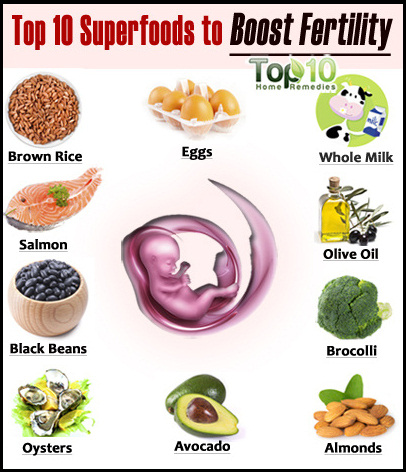
Top 10 Superfoods to Boost Fertility

Having a baby is one of life’s most desired and precious events. So when you struggle to become pregnant, it can take a toll. Fortunately, the solution may be closer at hand than you think.

Food and fertility are intrinsically linked. A proper diet helps regulate hormones and improve a woman’s health, increasing her chances of getting pregnant. Also, a properly planned diet helps prepare a woman’s body for pregnancy and can even prevent miscarriages.
Here are the top 10 superfoods to boost fertility.


1. Brown Rice

Brown rice is a good source of complex carbohydrates, which will help improve a woman’s fertility by promoting regular ovulation. In a six-year study of 18,000 Harvard nurses, researchers found that those who ate white rice were 92% more likely to experience infertility compared with those who ate brown rice.
Also, brown rice contains a good amount of folic acid, which aids in blood production and is very important for preventing neural tube defects in newborn babies. Try to include brown rice in your diet three times a week for your overall health.

2. Whole Milk
If you are trying to conceive, stop drinking skim milk as it has been found to promote infertility. Instead, opt for whole milk, which contains a good amount of calcium that is great for reproductive health as well as your bones.
Also, whole milk has fats that are needed for pregnancy. If you do not like whole milk, you can include full-fat ice cream, yogurt or cottage cheese in your diet to get similar benefits. Drink one glass of whole milk per day to give your body the required calcium and improve your chances of getting pregnant.
3. Olive Oil
The monounsaturated fat present in olive oil helps improve the body’s sensitivity to insulin and reduce inflammation; both of these are good for fertility.
A study done at the Harvard School of Public Health found that higher intake of monounsaturated fat is directly linked to higher odds of live birth. So, women undergoing infertility treatment must include olive oil in their diet plan.
4. Broccoli
According to a study published in Fertility and Sterility, vitamin C-enriched foods are highly essential for those who are planning to conceive. Due to its high content of vitamin C, broccoli can help boost fertility.
In men, vitamin C improves sperm quality and protects sperm from DNA damage. In women, it helps reduce the chance of miscarriage and chromosomal problems. Also, broccoli is rich in B vitamins as well as calcium, iron, and zinc that are highly essential for women wanting to conceive when they are in their mid-30s or older.
5. Oysters
Oysters are an excellent source of zinc, a highly essential nutrient for those who are trying to conceive. In males, zinc helps increase testosterone and semen levels. Zinc deficiency in the body has been found to disrupt normal menstrual cycles in women and slow down the production of high-quality sperm in men.
Also, according to the Centers for Disease Control’s Assisted Reproductive Technology report, low levels of zinc in women have been directly linked to miscarriage in the early stages of pregnancy.
6. Eggs
Eggs contain vitamin D, which plays a key role in boosting fertility. According to a study done by Yale University, infertile women often suffer from vitamin D deficiency. Also, eggs are rich in antioxidants and carotenoids that boost fertility in women.
The vitamin B12, omega-3 fats and folate in eggs also will minimise the possibility of birth defects. Those who are planning to conceive, and who also keep a close eye on their weight, can safely enjoy up to six eggs per week.
7. Salmon
Salmon is one of the best fertility-boosting foods. This is mainly due to its high content of omega-3 fatty acids, which can help regulate reproductive hormones, increase blood flow to reproductive organs, and even minimise stress.
Another magical nutrient in salmon is selenium, a mineral that produces antioxidants that protect the eggs and sperm from free radicals. It can also help prevent chromosome breakage, which is known to cause birth defects and miscarriages.
Try to incorporate a serving of oily fish like salmon into your diet two to three times a week. You can also include sardines, mackerel, herring, and anchovies to boost fertility.
8. Black Beans
Black beans are rich in fibre that helps regulate blood sugar levels, which helps reduce fertility issues such as polycystic ovary syndrome and immunological issues while promoting a healthy hormonal balance.
Plus, black beans contain vegetable protein. According to a study published in the American Journal of Obstetrics & Gynecology, a diet high in vegetable protein can make you more fertile. Also, black beans contain folate, manganese, protein, magnesium and iron that are highly essential for women who are planning to conceive.
9. Almonds
A diet high in vitamin E has been shown to improve sperm health in men. Studies have also shown that vitamin E deficiency in women can be one cause of infertility. Vitamin E is also an important antioxidant that helps protect DNA in sperm and eggs.
Also, this nutrient protects embryos from miscarriages. To increase your intake of vitamin E, one of the best superfoods is almonds. Try to eat some dry roasted almonds daily with a glass milk to improve fertility.
10. Avocado
This fruit boosts productivity due to its high content of folic acid, monounsaturated fat and healthy enzymes. Folic acid, a type of B vitamin, helps increase fertility in both women and men and it also helps prevent neural tube defects in babies.

Plus, the monounsaturated fat in avocado helps regulate the hormones involved in reproduction and increase your chances of conceiving. Those who are undergoing in-vitro fertilisation (IVF) treatment should eat a salad made with avocado and olive oil daily.
In addition to including these superfoods in your diet plan, you can increase your chances of becoming pregnant by reducing stress, sleeping properly, drinking ample amounts of water, exercising regularly, managing your weight, quitting smoking and avoiding too much alcohol.

                                                                                                                                                                                                              source: LG365GetPregnantSuperFoods


Saturday, 14 January 2017

Excessive Burping 


Burping is also referred to as eructation, rectus or belching. It may be described as the expulsion of air or gas from the stomach through the esophagus to the mouth. In some cultures, this is acceptable and is taken to mean that one is appreciating the good meal he or she has just had. However, the natural process can become excessive. Excessive burping is frequent, inconvenient, loud and a bother to those next to you. In this case, you will need to understand what causes the condition and how you can possibly remedy it.
What Causes Excessive Burping?

1. Swallowing Air
Swallowing large amounts of air within a short time can lead to frequent belching. This happens when you either drink carbonated beverages like beer and soda or eat too quickly. Additionally, chewing gum may also cause this condition. Smoking can also make someone burp more frequently than usual. In addition to burping, swallowing excessive gas can also cause gas pains in the stomach.
2. Heartburn
Heartburn or indigestion may also cause excessive burping. Heartburn may be due to various things. For instance, it may be a symptom of a peptic ulcer, a spicy meal that irritates your stomach or just as a result of acid reflux. When acid refluxes from the stomach to the esophagus, the patient will frequently swallow in a bid to ease the burning sensation associated with the condition. This frequent swallowing makes him, or she swallows a lot of air, leading to excessive belching.
3. Gastroparesis
Also known as delayed gastric emptying, gastroparesis is a condition in which food remains in the stomach for a longer period than it is supposed to. Damaged stomach muscles mainly cause this condition. If the undigested food stays in the stomach for an extended period, it can lead to nausea and vomiting. Additionally, this can also result in frequent burping.


For a healthy stomach flora and Replenish of Good Bacteria in your Gut use Natural Probiotic Supplement: http://tiny.cc/bestprobiotic
4. Certain Foods
Various drinks and foods may lead to frequent burping. Some of such foods include alcohol and carbonated drinks and foods high in sugar, starch or fiber, such as lentils, beans, onions, broccoli, cabbage, peas, raisins, cauliflower, raisins, whole-wheat bread and bananas.
5. Drug Reaction
Some medications can lead to burping or cause belching themselves. Such drugs include acarbose, a drug that is commonly used by diabetes type II patients. Others are laxatives, such as sorbitol and lactulose. Additionally, pain medications, like ibuprofen, aspirin, and ibuprofen, can also cause excessive burping.
6. Underlying Conditions
Belching can also be a symptom of an underlying medical condition. However, belching alone cannot be used as a certain indicator of any condition. Some of the conditions that may manifest in the form of belching include:
Gastroesophageal reflux disease
Gastritis
Lactose intolerance
Sorbitol or lactose malabsorption
Helicobacter pylori (H. pylori)
There are also other conditions that can lead to belching, but to a slight extent. Such underlying conditions include:
Celiac disease
Dumping syndrome
Pancreatic insufficiency
7. Pregnancy
While pregnant, excessive burping is a natural and normal phenomenon because digestion is quite slow during pregnancy. This slow digestion is caused by the relaxation of the digestive tract muscles, owing to the increased levels of progesterone hormone in the body. Inactivity during pregnancy can worsen the condition leading to bloating, flatulence as well as excessive belching.


Drinking Water on Empty Stomach is healthy as all of us know. 


Diseases getting cured by Drinking enough Water: Headache, body ache, heart system, arthritis, fast heart beat, epilepsy, excess fatness, bronchitis asthma, TB, meningitis, kidney and urine diseases, vomiting, gastritis, diarrhea, piles, diabetes, constipation, all eye diseases, womb, cancer and menstrual disorders, ear nose and throat diseases. To learn more, please visit: http://lg365days.com/drinking-enough-water/